
Rules Are for the Little People
What happens when one party nakedly ignores the law

Leona Helmsley (once known to New Yorkers as “The Queen of Mean”) famously said that “only the little people pay taxes.” The Department of Justice took a different view, and Leona did time for tax evasion.1 That was a simpler time, when the law actually meant something, and jurists at every level worked to strengthen the rules, understanding as they did that the alternative was descent into chaos.
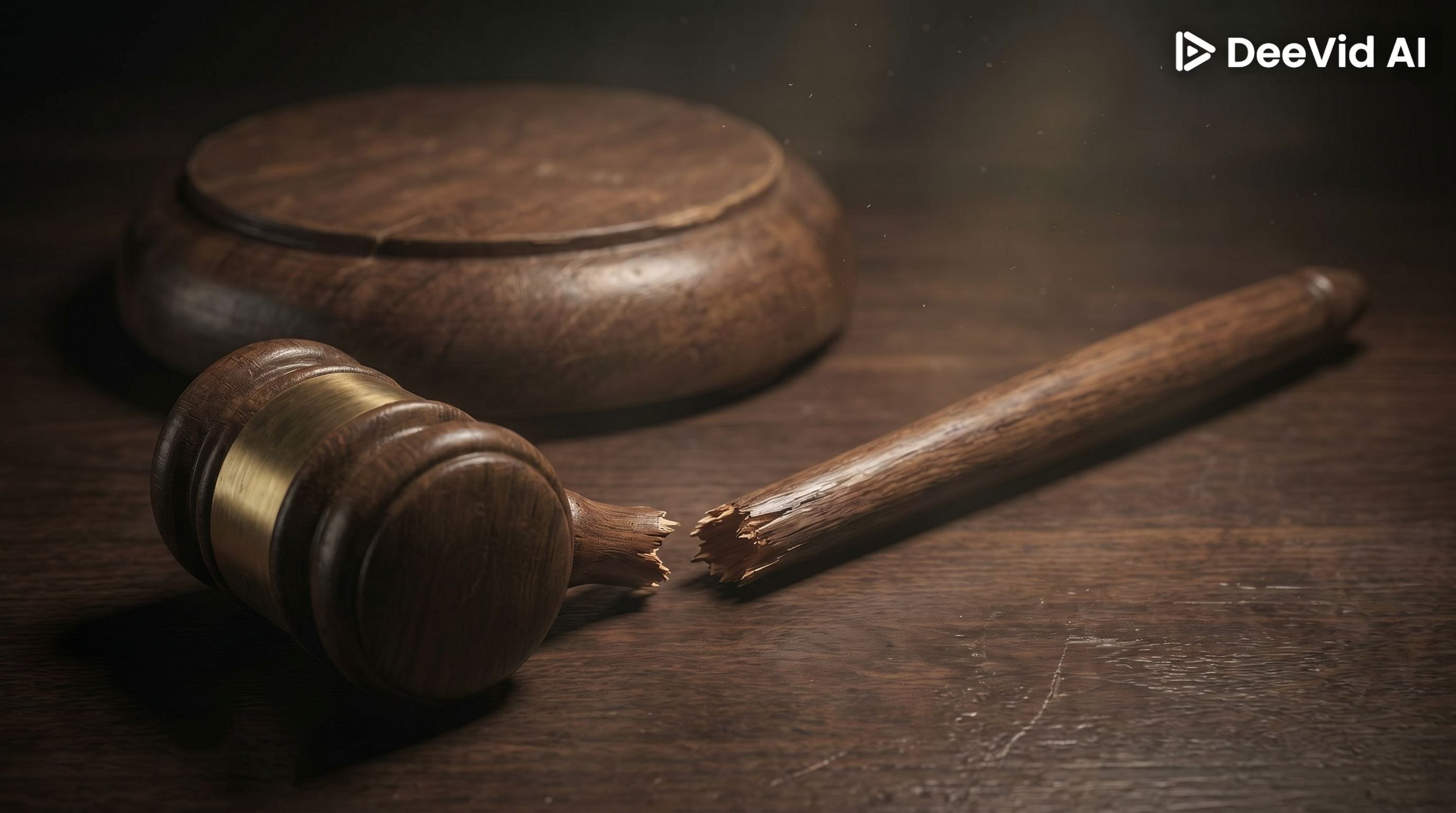
These days, judges on the highest courts, in both the state and federal systems, take the view that free speech and the right to vote aren’t universal. To paraphrase George Orwell: All votes are equal, but some votes (and voters) are more equal than others. Thus does SCOTUS torch the carcass that it made of the Voting Rights Act (VRA), by claiming that congressional districts drawn to protect minority voters and their choices, violate the VRA by effectively disenfranchising White voters. Never mind that that was the very purpose of the VRA. Justice Alito’s intellectually dishonest opinion, to use a Vietnam-era phrase, destroys the VRA in order to honor and save it.2
The decision in Louisiana v. Callais was disappointing, but not really unexpected given the composition of the Court. Barely a week later, the Virginia Supreme Court decided that the March referendum in that state, drawing new district lines that favored Democrats, was invalid because (checks notes) “intervening period” must mean more than four days over a weekend. This is the kind of logic that gives lawyers, and the legal profession, a bad name: invalidating the clear will and intent of the voters because, well, you disagree about the number of angels who can dance on the head of a pin. One commentator noted that it was a “close call” at 4-3. Said pundit neglected to mention that the 4-3 vote was along party lines; this is a bit like saying that Mike Johnson was elected Speaker by a bipartisan majority: after all, both Democrats and Republicans do sit in the US House of Representatives.
I had a professor who, expounding on a particularly troubling court opinion — one based not on rigorous logic or legal precedent, but on a common dictionary definition — noted that, “Every time they get in trouble, they go running to the dictionary.” We should expect better of our elected officials, but (for now) that seems a lost cause; we certainly should expect better of high court justices, but that too is a quaint memory of a bygone era.3
We should expect more of our elected officials: I come back to this, again and again. In New York City, the establishment was shocked when Zohran Mamdani was elected Mayor, essentially on a platform of, “We the People should have nice things.” The argument that we can’t afford it is tired, and a lie: of course we can afford nice things. We can afford free bus service; we can afford day care, and universal schooling, and health insurance for everyone. It requires an almost superhuman effort to rewrite, in small increments, bits and pieces of our tax codes; but we certainly can afford these things. Mayor Mamdani’s modest proposal is to tax expensive NYC pieds-a-terre; and he has gained the governor’s agreement. Note that this is a one-time tax, a wealth tax on second residences. The GOP’s response, in the person of Bruce Blakeman, is that the Mayor is coming to take away your home. Uh, no. But such dishonesty has so often worked before, so why not give it a shot?
Only suckers pay taxes. Only GOP voters are legitimate. And rules are for the little people.
Democrats keep trying to play by the rules, but the umpires and referees have been bought. Establishment Democrats haven’t quite caught on: respecting the corrupted decisions doesn’t honor rules, it legitimizes the corruption. Rolling over — “We respect the system though we disagree with the outcome” — is no longer a viable option.
Most of us learned that respect has to run both ways. You might respect the system, but the system doesn’t respect you. And if you don’t fight back, hard, voters won’t respect you either. It’s a setup with nothing but bad outcomes: people don’t like Republicans but don’t trust or respect Democrats. That leaves them sitting on their hands, sitting out elections, waiting for an election that provides something better than what they see as simply the lesser evil.
On January 6, 2021, Trump incited a deadly riot at the US Capitol: “We fight like hell. And if you don't fight like hell, you're not going to have a country anymore.” Hate the messenger all you want, but heed the message. You can’t play by the rules against a mob that ignores them. And you can’t be skittish about a race to the gerrymandering bottom. You’re already stuck in the mud. Win the damned race, by any means necessary.
Trying to be the bigger person just makes you look small.
The investigation was kicked off by complaints of non-payment made by tradespeople working on her house in Connecticut, which seems oddly familiar. Trump, you see, was not the only high-profile New York developer to stiff the building trades; and like Trump, Leona was a frequent litigant: the billionaire sued her son’s estate to recover $150,000. She bequeathed $12 million to her dog.
If you don’t get the reference — and why should you? — please look up the battle of Bén Tre and the subsequent My Lai Massacre.
Roger Traynor, Learned Hand, Henry Friendly, Augustus Hand: among many others, these were giants of the law in the twentieth century (and never served on the United States Supreme Court). They were unafraid to push the envelope, but their rulings were always intellectually grounded and rigorous. Where are their equals today? (Don’t bother looking: you’ll find none.) Others, such as Benjamin Cardozo and Louis Brandeis, made their most lasting contributions before elevation to SCOTUS.)